What's in a golf bag?
Meet the driver, woods, hybrids, irons, wedges and putter: how to recognise them, what each does, and a simple beginner's bag.
On this page
A golf bag holds several clubs because one club cannot do every job well. Some send the ball a long way, some lift it into the air over a short distance, and one rolls it along the ground. You choose a club for the shot in front of you, rather than using them in a fixed order.
You can carry up to 14 clubs under the Rules of Golf, but you do not need 14 to start. A smaller set is easier to carry and gives you fewer decisions to make.
The clubs you will see
| Club | How to recognise it | What it is for |
|---|---|---|
Driver 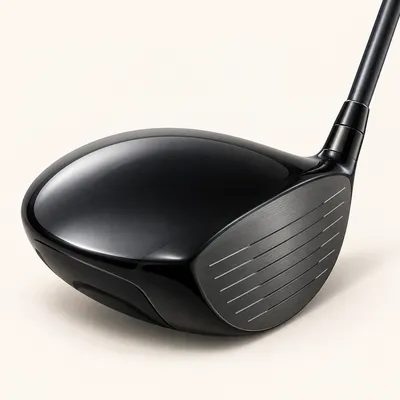 |
Usually the longest club, with the largest rounded head; sometimes marked “1”. | Long opening shots from a tee, usually on longer holes. You do not have to use it on every hole. |
Fairway wood 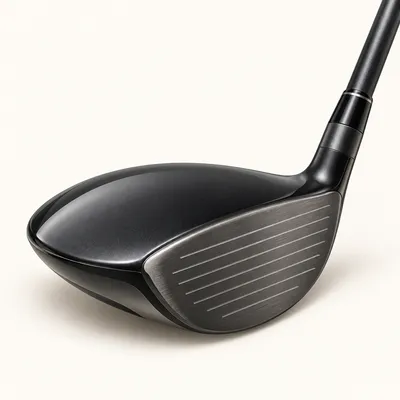 |
A rounded head smaller than a driver’s, often marked 3 or 5. Modern “woods” usually have metal heads. | Long shots from the fairway, or a tee shot when you want an alternative to the driver. |
Hybrid 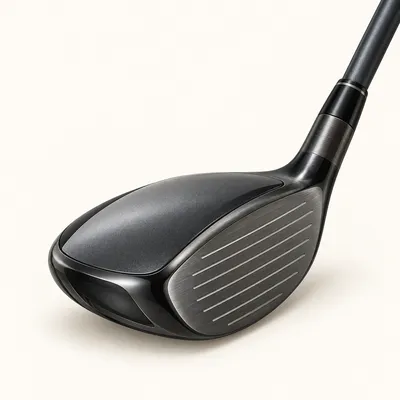 |
A compact rounded head, between a wood and an iron in appearance; sometimes called a rescue club. | An alternative to a long iron for longer shots. Many beginners find it easier to hit. |
Irons 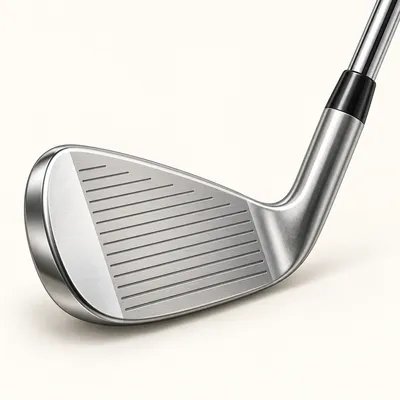 |
Smaller, flatter metal heads with numbers such as 6, 7, 8 and 9 on the sole. | Shots towards the green at different distances. Within a typical set, higher numbers generally mean shorter shots and a higher flight. |
Wedges 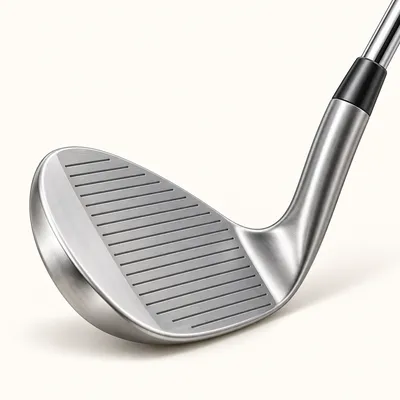 |
Similar to irons, but with a more steeply angled face; often marked PW, SW or a number such as 56°. | Short shots near the green, lifting the ball over obstacles, and shots from sand. |
Putter 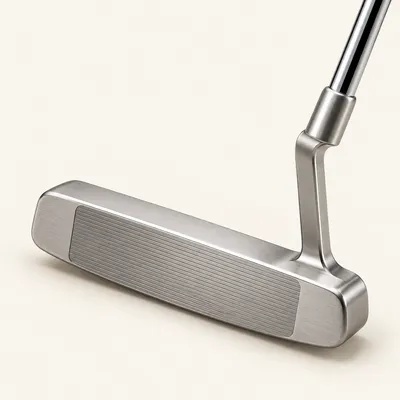 |
A relatively upright face; the head may be a narrow blade or a larger, broad shape. | Rolling the ball towards the hole on the green. It is sometimes useful just off the green too. |
What the numbers mean
The number on a club is a label, not the score you should make with it. A 7-iron does not mean seven strokes. Within the same iron set, a 7-iron will generally send the ball farther than a 9-iron.
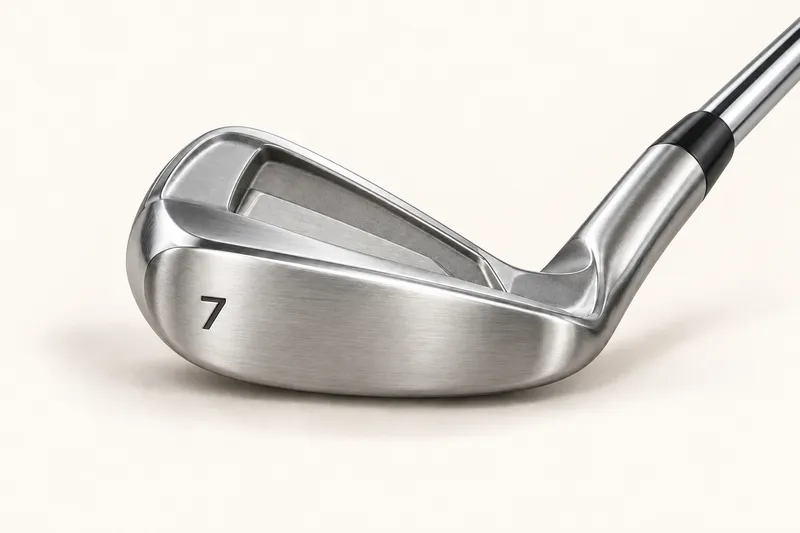
On wedges, PW means pitching wedge and SW means sand wedge. A marking such as 56° gives the angle of the face, called loft. More loft generally helps the ball fly higher. You do not need to learn all the angles for your first lesson.
Distances vary with the golfer, the club and the conditions. Learn how far you hit each club instead of trying to match somebody else’s distance chart.
A simple beginner’s bag
One possible small set is:
- A driver for practising longer tee shots.
- One hybrid for longer shots from the grass.
- A 7-iron and a 9-iron for different approach distances.
- A pitching wedge and a sand wedge for shorter shots.
- A putter for the green.
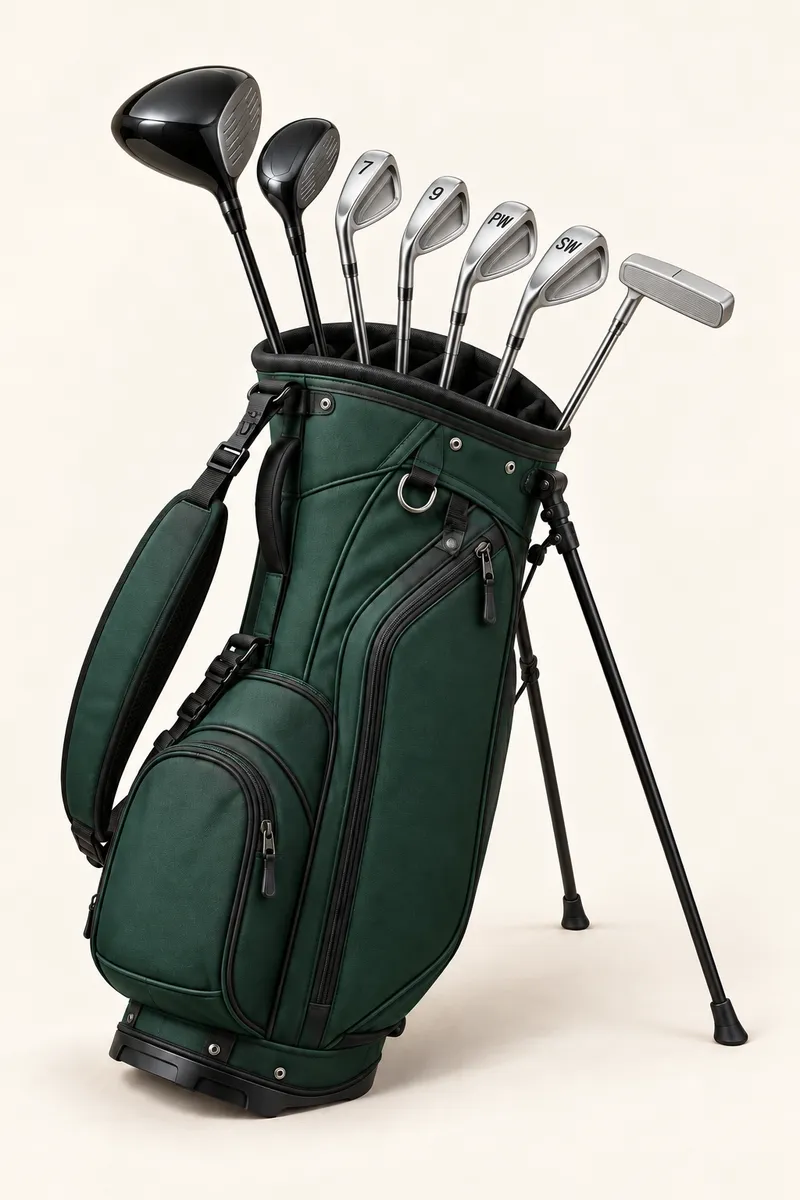
That is seven clubs, not a shopping requirement. For a first lesson, you may use only one iron and a putter. On a short course, you may not need the driver at all. Ask your coach which clubs suit the course and your swing, and hire or borrow a suitable set before buying.
The other things in the bag
Expect golf balls, tees, a towel and perhaps a glove. A small ball marker marks the ball’s position when it is lifted on the green. On natural-grass greens, a pitch-mark repair tool helps repair the dent a landing ball makes. Artificial-grass greens, such as those at Dream Valley, do not produce these pitch marks, so you do not need a repair tool for them. Water and clothing for the weather are useful too.
For the next step, see where to buy golf equipment in Moldova and where to play or take a lesson.